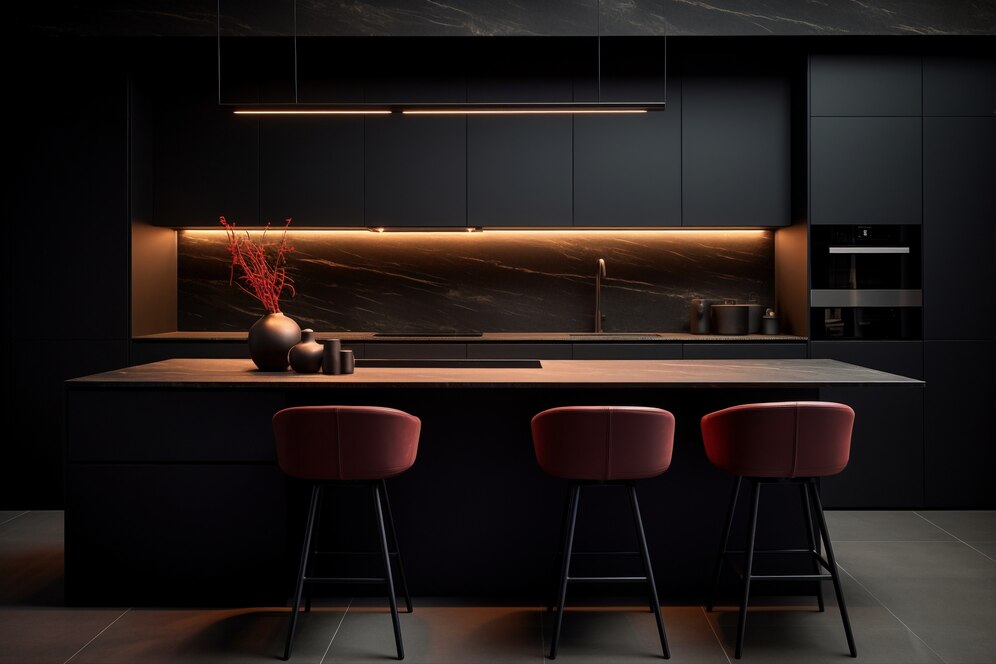
Not every “stone” wall is stone, and that’s exactly the point. Stone grain kitchen wall panels bring the rugged, textured character of natural stone into an interior through a panel-based finish. But the visual effect is only part of the decision. Material specifications, installation requirements, cleaning guidance, and moisture or heat limitations can matter just as much as the pattern itself. Before choosing a finish, it helps to look beyond the product image and consider how the panel will work in the actual space.
A Stone-Inspired Finish with Strong Visual Character
Stone Grain finishes focus on the natural visual language of stone, using variations in pattern, tone, and surface detail to create different looks. A restrained design can sit quietly behind cabinetry, while a more pronounced pattern can become the main feature of a wall.
In practice, the scale of the pattern matters as much as its color. A design that looks balanced on a small sample can appear much stronger when repeated across a large wall. Viewing a sample at the actual installation site can therefore give a more realistic idea of how the finish will work with the room’s lighting and surrounding materials.
The panel format also creates a different appearance from individual tiles, where grout lines become part of the finished design. A stone-inspired panel should not, however, be treated as identical to natural stone because material properties, installation, and maintenance requirements can differ.
Where Stone Wall Panels Can Add Interest
Stone grain panels can bring a textured, stone-inspired finish to select kitchen walls, feature areas, and other interior spaces. In kitchens, they can suit selected wall sections or feature areas, though spots exposed to heat or moisture should follow the panel’s stated requirements.
Beyond the kitchen, decorative stone wall panels can also suit feature walls in living rooms, dining areas, and other interior spaces. Using them on a defined section can create a focal point without pulling attention away from every other surface in the room.
Room proportions matter too. A narrow wall may benefit from more selective coverage, while a wider feature wall can accommodate a larger panelled area. Checking the wall size before settling on a pattern helps you avoid picking a finish based purely on how it looked in a catalogue or product photo.
Stone Grain Compared with Other Wall Finishes
Different wall finishes bring different visual and practical results to a space.
| Finish | Visual direction | Main consideration |
|---|---|---|
| Stone Grain panels | Stone-inspired patterns and surface character | Check material and application |
| Tiles | Individual pieces with varied formats | Grout and fitting influence the final appearance |
| Paint | Continuous color with minimal texture | Offers a simpler visual surface |
| Natural stone | Genuine stone with natural variation | Has different material and installation requirements |
Stone grain tends to read as a more continuous, stone wall panels decorative surface compared to tiled finishes, whereas paint gives you a far simpler visual backdrop. Natural stone, meanwhile, carries genuine material variation that no decorative panel can fully replicate.
So the choice ultimately comes down to what the room actually needs both visually and practically rather than assuming one finish can stand in for another across the board.
The Practical Details Behind the Design
Once you’ve settled on a visual direction, a few practical details will determine how well the panels work in the space. Before choosing decorative stone wall panels for an interior, it’s worth checking the following:
- Application: Make sure the panel is actually intended for the wall or area you’re installing it in.
- Heat and moisture: Look for any stated limitations, especially for kitchens or spaces where conditions tend to change.
- Cleaning: Stick to the recommended cleaning method for that particular surface.
- Installation: Check what fitting method is required, and keep panel dimensions, joins, corners, and edges in mind.
- Product specifications: Check the material and measurements of the panel, along with installation information, before placing an order.
Joins, corners, and edges are worth thinking through at the planning stage, since they can shape how the finished installation actually comes together. Working through these details early also makes for more accurate measurements and fewer surprises during fitting.
Matching the Finish to the Interior
Think about how the Stone Grain finish will sit alongside existing cabinetry, flooring, furniture, and worktops. It doesn’t have to match every surface pairing it with simpler materials can actually create a more balanced interior.
Stone Grain is also just one option among finishes like Wood Grain, Metal Series, and Solid Color, giving the wall treatment room to complement the overall design direction.
Bringing the Right Wall Finish into Your Design
A wall finish tends to work best when it actually complements the materials already in the room. Start by looking at the cabinetry, flooring, and surrounding surfaces, then choose a finish that fits the broader design rather than treating the wall as its own separate decision.
Blackbox Kitchens offers Stone Grain alongside Wood Grain, Metal Series, and Solid Color wall-panel finishes, giving homeowners clear, distinct surface directions to weigh up when planning a kitchen or a wider interior scheme.Frequently Asked Questions
1. Can stone grain wall panels be used in kitchens?
It depends on the panel and where you want to put it. If it’s for a kitchen, check the maker’s notes on heat, moisture, cleaning, and fitting before you decide.
2. Can decorative stone wall panels be used as a backsplash?
Only if that panel’s actually made for it. Don’t assume check the heat and moisture specs before putting anything behind a cooktop.
3. What is the difference between stone grain panels and natural stone?
One’s designed to look like stone; the other is stone. Expect differences in how they’re made, installed, maintained, and how much they vary in appearance.
4. How do I choose the right Stone Grain wall panel?
Start by measuring your wall, then take a look around the cabinetry, flooring, lighting, whatever else is nearby. Once you’ve got a shortlist, check the dimensions, what it’s actually meant for, how it’s cleaned, and the rest of the specs before you commit.
5. Are stone wall panels decorative enough for a feature wall?
Definitely, a good stone grain panel can make a wall pop without touching anything else in the room. It really comes down to the design, the wall size, and what’s around it.